Authors

Showing posts with label packaging. Show all posts

Thursday, August 22, 2013

Red, Green, Brown? What Colors Mean for Packaging

by Sarah Cornelisse, Sr. Extension Associate

If you send someone to the store to purchase something for you, how do you describe the product to them?  Brand name, size or shape of package, color?  Color is a critical design component for packaging.  Different colors elicit different meanings, feelings, perceptions on the part of the viewer.  "Color communicates psychologically by creating a mental association.  This mental association with color is what determines an individual's perception of an object or its surroundings" (Climchuk & Krasovec, Packaging Design: Successful Product Branding from Concept to Shelf).
Source: taitfarmfoods.com

When is comes to food products, color is widely used to illustrate flavors in food products.  We see this exemplified in the image to the left.  Each product, while having the same basic label, is differentiated by the use of a color meant to represent the flavor of the jam/preserve.

Since consumers rely heavily on color to identify products and make purchasing decisions, you should invest considerable effort to determining the color scheme that best and most effectively conveys and elicits the perceptions you intend.  Let's talk about what different colors can mean, or feelings that can be associated with them.
Do Bob's overalls make you hungry?

Red. Red can be associated with numerous meaning or feelings; heat, aggression, danger (Stop signs/light, anyone?), excitement, power, and love (it is the dominant Valentine's Day color!) are just some.  When associated with food, the color red has also been shown to increase appetite, hence the reason it is widely utilized in the fast food industry.

Orange. Falling between red and yellow, orange combines some of the associations from both those colors.  Feeling conveyed via orange include cheerfulness, energy,  and enthusiasm.  Orange can also be seen as a commanding color, as seen by it's use by road crew workers, so it can be useful as an accent color to draw attention.

Yellow.  Yellow is generally perceived as a positive color, conveying happiness, optimism, warmth, and wholesomeness. 

Green.  Green is increasingly being used on food packaging to denote healthiness since the color is closely associated with nature and the environment.  Compare the use of green in the two images below.  In the image on the left, we see very little use of green, while in the image on the right, Smuckers has replaced the traditional flavor-related color on the lid with green, in addition to incorporating a green background scene, in their effort to highlight the "natural" designation of that product line.
Source: Smuckers.com


Blue.  Though not heavily used in food packaging (except for maybe skim milk and fat-free products), blue is the most popular color in the U.S.  Blue is often seen as a calm, cool, relaxing color, but may also denote sadness or solitude.  It is also a color that represents authority, dignity, and wisdom - think of blue suits worn by professionals. 

Purple.  Historically a difficult color to obtain naturally, purple is often associated with royalty, luxury, spirituality, and bravery.  Shades of purple are often used to denote berry flavors in food products.

Brown.  Like green, brown is also often identified with the earth and nature.  It's no wonder we see many products that want to be recognized as natural, organic, healthy, and the like, use these two colors in their packaging or labeling designs.

Source: deandeluca.com
Black.  Tuxedos, black tie and tails, black pearls...items that symbolize power, wealth, sophistication.  Black is often seen as a reliable color to indicate luxury or high-quality items.  The ice cream in the image to the right most likely would be viewed (from just the packaging) as being higher quality than your typical store brand ice cream.

As noted by the authors of Packaging Design, using black in packaging can enhance the use of other colors, making those colors "pop" out to the consumer.

White.  The last color we'll cover, white, is one that can easily work for you or against you.  Often symbolizing cleanliness, quietness, purity, or freshness, it can also come across as nondescript and generic.  If you're considering white for your primary package or label color, you may want to take into account how often you think the product will be handled or where it will be stored/located.  The last thing you want is for your product to appear dingy or dirty to the consumer.

For more information regarding color check out these resources:


Tuesday, July 23, 2013

Packaging Design and the "Brand"

by Sarah Cornelisse, Sr. Extension Associate

In my last post, I discussed the functional purposes that packaging serves for food products.  I'd like to continue the discussion on packaging by covering the role of packaging design with the "brand."  In their book, Packaging Design: Successful Product Branding from Concept to Shelf, the authors lay out seven roles that packaging design plays in the definition of a brand.

Brand Evolution - Brands grow, evolve, and change over time; and product packaging will evolve as well.  Packaging is used to connect with the consumer, and as the brand evolves, so should its packaging to accurately reflect and convey meaning to the consumer.
The owner of this honey business, specifically chose
this unique container (brand identity) for her product to
differentiate it from the competition and to convey the
image of quality to consumers (brand promise).  

Brand Identity - The brand identity consists of the visual, tangible aspects of the brand used to "create an emotional connection with the consumer."  In relation to packaging, brand identity is created through the use of color, symbols, typography, package material, etc.  This aspect of packaging is something that I will continue to explore in future blog posts (so keep coming back!).

Brand Promise - When consumers purchase a product, they are believing that they are getting certain things - a certain level of quality, functionality, contents, etc.  The brand promise is conveyed to consumers through the brand identity.

Brand Equity - Brand equity is the good will and trust that is built up with consumers over time.  Packaging, serving as the image of the brand, conveys the "values, qualities, features, and attributes" of the brand; things that trust is built upon.

Brand Loyalty - The trust that is built with consumers, representing brand equity on the side of the business, hopefully converts to brand loyalty by those consumers.  When brands deliver on their promises and consumers develop loyalty, they are more willing to go to greater lengths to seek out a product, pay more it, or convey that loyalty by sharing it with others - perhaps by "liking" the brand on Facebook, wearing a t-shirt with the brand logo, etc. 

Brand Repositioning - Sometimes a brand has to reposition itself to compete more effectively in the marketplace with its competitors.  When repositioning, a brand has to be cognizant of its existing equity with consumers and carefully consider how any changes to packaging design could impact that equity.

Brand Extension -Brand extension occurs when new products are introduced to the product line or when the brand decides to enter a whole new product category.  Businesses will often try to take advantage of the brand equity that has been built up; one way of doing this is to extend aspects of the packaging design to these new products.

Packaging design plays an integral role in the "brand" and is something that business owners should work to ensure gives them an advantage in the marketplace.  Market research, specifically, understanding how the aspects of brand identity relates and influences the target market is key.

Friday, June 28, 2013

What Purpose Does Packaging Serve?

Take a minute to think about the last packaged product you purchased.  Was there anything about the package that drew you to it?  Perhaps the size, shape, color, or story about the business on the label?  Or, perhaps you prefer glass to plastic.  I know that when I'm traveling and stop for a snack, I'm usually looking for something in a resealable package (I don't want my snack getting loose in my bag or car, after all!).
I look for resealable packages,
like this one, when traveling.


When it comes to a package, it serves four principal functions:
  • Containment - Obviously, with multi-item products, such as my M&Ms, they need to be contained in some fashion.  As do food products such as juices, jams, sauces, etc.
  • Protection - There are many reasons we want our food products protected through the use of packaging - protection from the elements, from possible tampering, from shock, vibration, etc.  Packaging helps to ensure that food items are in the same condition when the consumer purchases it as it was when produced.
  • Information - Packaging serves as a convenient place to provide a variety of information to the consumer about the product itself, as well as the company that produces it.  Information can range from legal requirements, such as nutritional information and ingredients, to stories about the company background or founders.  Product packaging also conveys information in the form of "trade dress," or the set of visual characteristics that help the consumer identify products from the competition.
  • Utility of Use - Let's face it, packaging makes life easier when it comes to using the product, whether it be pouring, dipping, or storing the item.  The right package can make a big difference.

However, packaging also helps with the mental placement of a product in peoples' minds.  I saw this quote in the book Successful Food Packaging Design and wanted to share it:
"Packaging is people's perception of the brand; it's that core....When people think of your product - whatever kind of food it may be - they picture the package it comes in" (Mark Greene, Pecos Design)
Every mix of packaging material(s), color(s), size, and other characteristics sends unspoken messages to your customers about your product.  I'll discuss some of these elements in coming posts.  However, food entrepreneurs should first be concerned about these four functional aspects of packaging.

Wednesday, June 26, 2013

Food Products and UPCs

by Winifred McGee, Extension Educator, Dauphin County

There are so many things for a new business owner to consider as the product moves from a "vision" to reality.  When the food items are created to have shelf life, designing an appropriate package is always part of the process - and whether to include a Universal Product Code (UPC) on that package is always a consideration.  Food products that will be sold exclusively in farmers' markets, specialty stores, or over the Internet (so that they never pass over a scanner) do not require barcodes.  However, if a would-be food entrepreneur envisions the product in a grocery or big box store sometime in the future, having the code on the label will, sooner or later, be a necessity.

UPCs were launched by a 10-pack of Juicy Fruit gum
and a hand-made laser scanner.
Although many of us cannot remember a time when UPCs were not common in the marketplace, the initiation of this system is "relatively" recent.  A UPC produced its first familiar "beep" when a 10-pack of Wrigley's Juicy Fruit gum passed over the prototype scanner at March Supermarket in Troy, Ohio, on June 26, 1974.  The technology is actually 39 years young!

At a 2004 ceremony commemorating the original first scan, Tom Jackson, the president and chief executive of the Ohio Grocers Association, said "(t)he bar code has forever changed the world and the way we do business as an industry."  Although other industries had experimented with barcodes before 1974, the groceries were early adopters of the UPC, since this technology allowed the stores to change from using item-level price tags to shelf tags, and eliminated the keypunch errors at the register.  In an era before the "super store," grocery stores of the 1970s had a finite number of price lookups (PLUs) and the average customer bought a number of items per store visit - this made these retail establishments a "natural" for trying out the concept.  March Supermarket was chosen to be the first to incorporate the technology because of its proximity to Dayton (home of the NCR where the checkout counter was designed).  After a number of years of "trial and error," it was noted that using barcodes resulted in fewer under-rings (reducing revenue loss), and helped keep shelf inventories more efficiently - forever linking UPCs with grocery stores.

Almost 40 years later, food entrepreneurs who visualize their gourmet jams, salsa, or meat rubs on a retail shelf will find that joining the tradition of incorporating a UPC is a must.  For a proactive business owner, including a barcode with the first run of labels may make great sense, so that the product is ready when the demand is right.  Since UPCs depend on company-specific codes, barcodes must be purchased from a vendor.  This is most easily accomplished by going to the non-profit company, GS1 US.  Although barcodes are available at other sources, GS1 US guarantees that each company prefix will be unique, and they provide the tools and training for business owners to get started using UPCs.
This familiar UPC is a "must" for selling through
groceries and big box stores.

The amount a company pays for barcodes is determined by the number of distinct products the company makes (and the number of different sizes of each variety) since each flavor and quantity will need its own code.  A secondary factor affecting the cost of barcodes is the annual gross revenues realized by the business.  New customers can easily estimate the fees that they will likely pay, using the downloadable Barcode and Fee Estimator, available on the GS1 US website.  The smallest purchase increment available is 100 barcodes, and the smallest revenue level is "less than $250,000" - these two factors resulting in an initial fee of $760 and annual renewal fees of $158.  While this may seem like a lot of money to spend before a wholesale contract is in hand, the costs will most likely be greater if an entrepreneur waits to retro-fit packaging (that is, to include the barcode) until he or she actually has an order from a store.

Being ready to respond to the demands and expectations of the customer is the road to business success.  In a marketplace laden with choices, it is much easier to launch an exciting, professional-looking food product that catches the consumer eye.  Food entrepreneurs who are looking for more information about food packaging may reference Food Labeling, a Penn State Extension fact sheet covering basic label requirements, or visit the Penn State Extension's Packaging and Labeling resource page.  For more comprehensive information about starting and growing a food business, look for a Food for Profit workshop near you this fall - bookmark the site and return in July to see upcoming class dates and locations.


Friday, July 6, 2012

Do You Offer Mass Customization?


Among the many topics we discuss in this blog, we often write about differentiation and unique products.  One way to take this concept further is to implement mass customization – a way of allowing customers to select from a limited number of components to create product that is “their own.”  An easy way to think of mass customization is to visualize a food gift basket – individual items (e.g., candy, food products, cooking utensils) are bundled together in a container and then wrapped or decorated to match the theme.  Someone had to develop the idea/theme/look for the gift basket – why not let it be your customers?

So, what are some examples of mass customization?

Several retailers have done well with the concept and according to a 2011 Forrester report, and subsequent blog postings, “Mass customization is (finally) the future of products” (http://tinyurl.com/3mgxxoh).  Perhaps you have even been involved in mass customization yourself.
  • Have you ever created a colorful blend of M&M’s?  If yes, you had a mass customization experience.  There are 24 colors to choose from.  Not every imaginable color is available, but M&M’s is probably pretty certain that most customers will find a mix of colors that appeals to them.  
  • Are you a devoted Converse sneaker customer – one that has a pair in almost every color or style?  Now you can design your own.  Again, you will 24 colors and 24 prints to choose from for the outside body of the sneaker and the same options for the inside, heel stripe, tongue, lining and other sneaker parts.  
  • Or, have you ever created a “My American Girl” doll for a young child?  You can select the hair color (10 options for blond hair), eye color (10 eye colors available for blond haired dolls), and hair styles (seven straight and three curly/wavy options for blonds).  


                                   What is the key to mass customization for small or independent ag. businesses?  

Limiting the number of options (e.g., colors, types of items) that the consumer can select from.

Why is this important?  If too many choices are offered it is likely that customers will be overwhelmed with what they can select from.  For American Girl, if all combinations were available (49 hair colors, 3 skin tones, 40 eye colors, and 40 hair styles) customers would have several thousand different dolls to choose from.  Most likely, the colors/prints/options available for mass customization are those that have been popular in the past.  By narrowing the options to a more manageable number the process is much easier for both customer and retailer– hence, it is called “mass” customization.

If you explore these or other examples of mass customization you may notice that the price point for the completed product is higher than off-the-shelf (not customized) products or the total price for all individual pieces used to make the final product.  Why is that?  Since you are offering customers a convenience (1. for assembling the components, 2. for coming up with the concept) and there are added labor costs for putting the final product together – you need to account for these “costs.”

So, what can an ag. business do to capitalize on mass customization?  

If you are not already offering customers the option to build their own gift basket – it is suggested that the interest in giving gift baskets will continue to be strong – this may be a way to foray into mass customization.  Gift baskets can be offered for a number of holiday (Valentine’s Day) and non-holiday (anniversaries, thank you) occasions.  So, the possibilities are endless.

Dean & Deluca is an example of a retailer that allows customers to build baskets in-store and on-line.  Consider a customer who wants to buy a thank you gift for a friend who is passionate about coffee.  Well, Dean & Deluca can help with that.  The gift giver starts the process by first selecting the container (limited number of options available).  Each container holds a certain number of items based on each item’s size which helps the customer determine how big the final gift will be and not overstuff the basket.  Wrapping and decorating finish the product’s look.

What are a couple of other mass customization options for ag. businesses?
  • Table-top Christmas trees have been a popular for a number of years – the convenience they offer customers is very appealing.  Consider offering customers the ability to designing their own decorated table top tree.  Allow them to select from three or four species, three or four decorations styles, and three or four container options.  
  • Offer customers mass customization for planters, containers, or small landscape designs. 

Look though your own inventory and think about how you could help customers create a product that has been customized - just for them.  

Friday, June 25, 2010

Can new packaging get customers excited about your product?

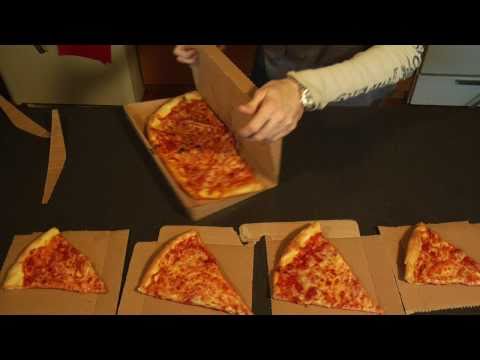
Pizza boxes are pretty much the same no matter what restaurant you go to. A new design though may change people's view of the "standard pizza container". A company called Environmentally Conscious Organization, Inc (ECO Inc) has developed a pizza box that can be broken into 4 plates and a leftovers box. The video below shows how this box, better known as the GreenBox, is used.


The GreenBox hasn't yet hit the market, but it has already gotten many people excited. In April 2009, asylum.com posted an article about the GreenBox. According to digg.com (a social networking site that allows users to bookmark websites and send them to friends), the GreenBox article has been Dugg (or shared) more than any other article in the history of the site.

As an agricultural entrepreneur, have you changed (or thought about changing) your packaging recently? How has this affected sales? Have customers asked for more eco-friendly packaging? If there was a great social media buzz about a new type of packaging available for a product you produce, would this affect your decision-making in packaging choices?

As a consumer, do you think the GreenBox is an innovative design? Would you like to see more packaging designed like this? Would you choose a restaurant specifically because they use GreenBoxes?