Authors

Monday, June 8, 2015

Internet Tools to Help You Learn About New Markets, Part 2

By Dr Kathy Kelley, Professor of Horticultural Marketing and Business Management, and Dana Ollendyke, Extension Associate


In our previous post, we discussed exploring new ways to market your products. We listed 3 of our favorite internet tools:
  • The US Census Bureau website.
  • Easy Analytic Software Inc (EASI) Demographics tool.
  • Small Business Development Center's Geographic Information Systems (GIS) reports.

In this post, we will focus on The US Census Bureau website. Census data is presented in multiple ways including:
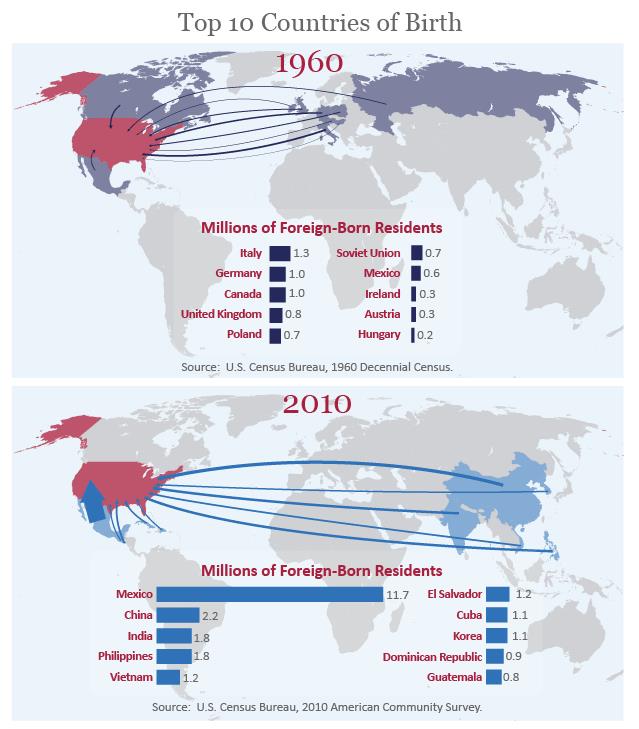
  • infographics (an example is presented in Image 1, below).
  • interactive maps.
  • audio.
  • photos.
  • publications.
  • video.
  • working papers.
  • software.
Image 1. Infographic displaying the changes in the number of foreign-born residents in the U.S. (1960 to 2010) and their native countries (Source: U.S. Census Bureau).


For this series, we will continue to use wine as our example.

Imagine that you read an article about which alcoholic beverages pair well with authentic Chinese food and you learned that Rieslings are a good choice since “they go well with Chinese cuisine because the mouth-feel is quite refreshing…the range of dry to sweet Rieslings can match all types of Chinese food, plus it’s never too heavy, but rather fresh and fruity.” Now you begin to think about:
  1. how you could inform current customers that your wines pair well with this popular cuisine (this article provides wine pairing recommendations for “Americanized Chinese” takeout – which also suggests Riesling as being an appropriate choice) and 
  2. how you could promote your Riesling to the Chinese consumers who may live in your region.
One of the first things you want to do for #2 is to learn whether there is a population of Chinese consumers in your county or metro area (and city if the population is large enough) and how many are ages 21 and older. For this example, we used the State College, PA metropolitan area as the location for learning about the existence and number of adults who responded during the 2010 Census that they were “Chinese (except Taiwanese) alone or in any combination.”

The tool we are demonstrating also allows us to search for data for “Chinese alone or in any combination” (which would include Taiwanese) and “Taiwanese alone or in any combination.” Hence, you can get fairly specific with your data requests. (The “alone or in any combination” means that the data describes those who indicated on their Census form that they were only Chinese as well as Chinese consumers who indicated that they were also of another race/ethnicity).

The abbreviated table below provides the following information: Total Chinese population (3,360 individuals in the State College, PA metropolitan area), as well as a breakdown by age range (e.g. 68.1% of these individuals were 21 and older in 2010), and the number of males who were between the ages of 20 and 24 (524 or 15.6% of the total population of Chinese).

Image 2. A portion of a table that describes the total population of Chinese (except Taiwanese) and breakdown by age range and other characteristics based on the 2010 U.S. Census.


There are many ways to build tables like the one presented for this demonstration. We simply used “metro/micro statistical area within state” and “Race and Hispanic Origin” as our search criteria and then selected the “DP-1 Profile of General Population and Housing Characteristics: 2010” (Image 3).

Image 3. Search fields and options available to create tables like that in Image 2 (From the US Census Bureau website).


One caveat is that data is only available if more than 100 individuals are in the group you are investigating. For example, with the State College metropolitan area being less populated than other metro areas in the state, there were not enough “Argentinians,” “Nicaraguans,” or others from select South American countries to create tables (though we were able to learn that at the time of the 2010 Census, there were 651 “South Americans” residing in the metro area). In contrast, data for the much larger metropolitan Philadelphia area showed that there were 2,336 Argentinians residing in this location. If there is a large population of Argentinians in your area and you want to promote a wine that will pair well with traditional “pork dishes and rich, winter-warming meat stews” then you would focus on your Cabernet Sauvignon (http://bit.ly/LjvC0R).

As you can see, the US Census Bureau website can provide a tremendous amount of demographic data for your specific target market location. Our next tool for learning about new markets is the Easy Analytic Software Inc (EASI) Demographics tool which will be discussed in the next post.

Tuesday, June 2, 2015

Reinventing the Public Market

Reinventing the Public Market
Concepcio Market
In March of 2015, the Project for Public Spaces held their international conference on pubic markets in Barcelona, Spain, one of the foremost capitals for public markets in the world. There are 40 markets in Barcelona attracting 62 million visits annually with an economic activity equivalent to 950 million euros.

However, Barcelona’s market scene was not always so bustling.  Inadequate commercial real estate, declining customers, and poor investments lead to a deterioration of market buildings and the market economy by the end of the 1980’s. In the early 1990’s, city council decided to reinvest in their city’s markets and renovate multiple locations. In 1992, the Barcelona Institute of Municipal markets (IMMB) was founded with a goal of local commerce as an economic driver to revitalize the markets and create jobs.

Working with local authorities and retailers, IMMB put together a strategic plan that set a goal for 2025 that will integrate the markets into their neighborhoods, becoming social assets and creating positive experiences for shopping and leisure with the foundation of the plan being “renovation, adaptation, innovation and promotion.”

Public-private partnership is key in the renaissance of these markets, but what else can we take from the success of Barcelona’s markets?  Pennsylvania is poised to adapt our public markets in a way that could make them a center piece for economic development to create jobs, support the development of entrepreneurial enterprises and sustain existing businesses.  

Both Barcelona and Pennsylvania have market structures dating back into the 19th century. Both are made of a mix of diverse products. Both create a public space where local residents can interact.

Many midsize cities and towns in Pennsylvania have a public market of some kind and Pennsylvania ranks third in the nation in direct to consumer market sales.  In addition, the local food movement has led to an explosion of farmers markets and value-added, artisan food producers in our state. However, many of our public markets have not enjoyed the same success.

Perhaps our markets can also thrive and remain relevant in our communities if we borrow a few founding principles that Barcelona used to revitalize their market economy. 

Renovation
What are some basic steps that can be taken to improve the appearance of our markets? Is the exterior inviting us to step inside the market? Are windows clean? Do we need to upgrade or have more modern conveniences? Do we have Wi-Fi, benches or seating? If people are comfortable enough to stay awhile, they usually spend more money. Is there easy access for everyone? Is there parking?  We want to have an inviting, functional and attractive market space for both retailers and customers.

Adaptation
Markets should reflect the needs of the communities they serve. What are the demographics of the community where your market is located? Is the vendor makeup and product offering reflective what the neighborhood would like to purchase? Is the community mostly young or seniors? What is the average household income?

More and more consumers want to know where their food is coming from and how it was produced. Can our vendors offer and promote that information?

Innovation
To keep our markets thriving and relevant we may need to attract the next generation of customers and they are the “millennials”. Millennials want “authentic” products. They also want an “experience” and a story behind their purchase. What experiences can we offer as a market place that will keep them (and others) coming back to the market as a destination for the community?

Promotion
We have so many ways to promote our markets that it can be challenging and feel a bit over whelming but if we understand who our customers are then we can target them directly using the media they consume. If the communities we are trying to attract are younger, then placing ads in print media might not be the best use of our advertising dollar since the majority of  younger consumers are using social media as their primary media for gathering information. Think about where the market is promoted, what is the demographic we are trying to attract, and do we think that our marketing efforts will reach them.  

Market managers who presented at the conference in Barcelona had some specific recommendations for keeping your market thriving and relevant.
  1. Develop a set of core values.  Example:
    1. Uniqueness
    2. Quality
    3. Diversity
    4. History
    5. inspiration
  2. Know the demographics.
    1. Age
    2. Gender
    3. Ethnicity
    4. Shopping trends
  3. Develop a whole market experience
    1. Quality products
    2. Exciting place to visit
    3. Create a market identity
    4. Offer options
Following these principals can help 19th century markets be relevant and vibrant 21st century markets.

Brian Moyer
Program Assistant
Penn State Extension
Lehigh County

Carla Snyder
Educator
Penn State Extension
Adams County


Friday, May 29, 2015

Internet Tools to Help You Learn About New Markets, Part 1

By Dr Kathy Kelley, Professor of Horticultural Marketing and Business Management, and Dana Ollendyke, Extension Associate


In the marketing world, we constantly discuss strategies to increase sales, and these conversations often focus on two options – sell more to your current customers or find new ones.

Most people would agree that it is much easier to meet current customers’ needs and demands because you already have a relationship with them. Therefore, your promotion and advertising “costs” (time and money) should be less than what you might need to acquire new customers.  For this post, we will be using wine as our example.

Imagine that you are looking for new markets to sell your wine to because:
  • your wine production volume has increased. 
  • you feel you have exhausted the local market and have done your best to attract visitors looking for a tasting room experience. 
  • and/or it is essential to investigate new opportunities.
When you first developed your tasting room business plan, you probably gave some thought as to how you would market to consumers and how you would identify potential clientele. If it has been awhile since you’ve reviewed your business plan, you will likely need to update it since your business has probably changed over the years.
 
Customers visiting a winery's tasting room (Photo credit http://bit.ly/1AyDrbl)

Perhaps you not only thought about how you would attract and meet the needs of consumers based on their generation, consumption frequency, and when they drink wine (e.g. while cooking, watching sports, at restaurants, etc), but maybe you even gave some consideration to learning about how different cultures approach wine and include (or exclude) wine from their diets.

We subscribe to several different online newsletters and journals (some of which are international) and regardless of the newsletter/journal’s origin, there is often an article about how a large brand, wine company, or group of wineries are looking to export to emerging markets. Along with providing information about current wine consumption and predictions, wine preferences, and how wine should be presented in the marketing place (cork vs. screw cap, for example), these articles discuss the population of these foreign lands in terms of growth trends, major population centers, generational distribution, major ethnic groups and races, gender breakdown, employment rate, etc. — all of which can help a business determine the viability of the market and to whom/where to market the product.

Though the goal of these articles is to provide information for targeting wine consumers, the information provided can certainly be useful for targeting consumers of any product or service based on specific racial and ethnic heritages.

But how should you begin crafting a strategy to target these consumers?
Winery tasting room owners/operators may be familiar with “who” lives in their city or county, but if you need a refresher or have never really delved into the demographic makeup of these residents, information can be found online in multiple places.

Some of our top picks include:

  • The US Census Bureau website.
  • Easy Analytic Software Inc (EASI) Demographics tool.
  • Small Business Development Center's Geographic Information Systems (GIS) reports.
We will discuss each of these tools in more detail in future posts.

Thursday, April 23, 2015

Building Your Farm Management Team - Finding a Good Accountant

By Juliette Enfield, Penn State Extension Educator, Warren Co
I recently met a farmer who said “I got into farming because I didn’t want to sit in front of a computer!”, and I’m sure she’s not alone. Oftentimes the farm accounting is at the bottom of the list of farm chores. Farm accounting can be tedious and daunting to those who are unfamiliar with spreadsheets, accounting terminology, and computer accounting software. However, the fact remains that if you are not managing your farm finances, you are unable to determine:
1. Whether or not your farm is profitable, which can only be determined from an income statement
2. Whether or not you are increasing your business’s net worth, which is evident from comparing several years’ balance sheets
3. Whether or not you are spending your money in the right place and at the right time, which is shown from a monthly or quarterly cash flow statement
Farm accounting can be daunting.
Fulfilling Legal Obligations-Tax Accounting
When I ask farmers what kind of accounting services they use for their farm businesses, most tell me they use a tax accountant once a year. Finding an accountant who is familiar with farm taxes (the Schedule F) is essential.
According to the US Internal Revenue Service, most farmers use the cash method (assessing accounts based on what is currently in the bank) for their income taxes because they find it easier to keep records this way, as opposed to the accrual method of accounting (assessing accounts based on what is in the bank after all accounts receivable and payable are calculated). This is because in agriculture expenses from one year may not generate income until the following year when the crop is sold. In other businesses, expenses and income cycle much more frequently, so the accrual method is used to report income earned in a year. Agriculture is also allowed payments for certain practices such as planting native trees and shrubs or keeping livestock out of streams by building stream bank fencing. An accounting firm that works regularly with farmers will be familiar with these incentive programs.
Some tax accountants offer auditing services for an additional fee, in which they will represent you in case of an audit.  Find an accountant who is in support of you and your business, and who you can establish a relationship with year after year. Talk to other farmers in your area for recommendations on good accounting firms to work with. If you fail to file your taxes, you will be fined and/or charged interest on the amount you owe, and it will be difficult to get access to a loan or do business at all until taxes are paid.
The Farm Bureau has a network of accountants throughout Pennsylvania that work with farmers on tax and payroll preparation, bookkeeping assistance, and financial consulting. If you are a Farm Bureau member, you may be eligible for discounted services.
Going Above and Beyond-Financial Analysis
Taking care of your taxes is a legal obligation, but analyzing your business finances is not. Tax preparation brings you one step closer to being ready to analyze your finances. Your tax forms can be used to create your income statement. Your receipts and sales records can be used to create your balance sheet and cash flow statements. Penn State Extension offers a course on understanding basic farm finance called Farm $en$e. This 4 session course helps farmers understand basic accounting terms, how to prepare accurate records, and how to use these records to better manage the farm.
Be pro-active about your farm finances.
If you are not sure that you will have time to learn how to use accounting software or you don’t feel comfortable doing your own financial analysis, you can hire a consultant. This service can range from $30 an hour to $150 an hour, depending on what your needs are and the consultant's level of expertise. The amount of contact you make with the consultant depends on the state of your business, your level of understanding of farm finance, and your commitment to making your business financially sustainable.  You could arrange meetings monthly, quarterly, or yearly. As with tax accounting, financial analysis also requires some level of expertise in your industry. This person should understand how your business operates and how it compares to others in the same industry. AgChoice Farm Credit is one source of accounting services with agricultural expertise.
In conclusion, the best place to find a tax accountant or a financial consultant for your farm business is by talking with other farmers in your area or in your ag industry. Be pro-active about your farm finances. If you don’t want to, or are not able to understand your farm’s  financial situation, hire someone to help you look at the big picture. Accounting services are different at every practice, so be sure you understand the range of services offered before signing a contract. Shop around for pricing that you can afford, as well as an accountant that you feel comfortable working with.

Sunday, April 5, 2015

First Impressions Count – Marketing Display Techniques from the World’s Best Markets

"Pile it high and watch it fly" is a popular marketing tactic that is alive and well in some of the best international markets. This month, members of the Penn State Extension Marketing team traveled to Barcelona to participate with market professionals from 6 continents and learn from some of the most profitable markets in the world. A recent trip through many of our host city’s most famous farmers markets yields interesting merchandising techniques to start your 2015 summer market season off with a bang and hopefully a few more bucks in your pocket!


Successful marketers in Spain’s bustling market places are pairing age old techniques with bright new merchandising tricks to make their produce pop!

Here are a few tips:

1. Careful stacking is paramount! First, form a solid base. You can’t pile it high if it rolls on the floor! Start with a stair step type foundation made of boxes, plastic reusable containers that stack to transport from the farm, or simply small boxes that you packed your product in to bring to market. Next, pad your stack to create a non-slip surface. This can be done with tissue paper or organic material such as leaves. Then stack your product in a pyramid formation, depending on its shape and resilience to stacking.


2. Display vertically. Think of the vertical space on your table and make good use of it! Typically customers can reach across a table at a distance of up to 4 feet if a display is tilted at an upward sloping angle compared to only a reach of 2 feet if they are forced to reach straight across the table in order to reach your item for their shopping basket. This can be achieved by providing steep sloping stair steps behind baskets and boxes angling them so products are served directly up to the customer’s ideal height and reach.


3. Think outside the box when making display rack choices. A unique display container or shelf can stand out if you limit your number of racks or other display items. Be sure not to crowd your stand with many small shelves or racks as this tends to give an over-decorated or busy look and distracts the customer from your product.


4. Height matters in the height of the season! When produce is plentiful and you must expand outside of your primary table be sure to raise items to an ideal level for your customer. An easy way to do this is to stack crates or boxes that you used to bring your product to market. Topping them with an eye-catching basket, cloth or other material makes items placed here stand out. This technique is also useful for special items you would like to highlight for the day in addition to when you have an overflow of tomatoes or large items such as winter squash.


Whatever your product or variety throughout the year, plentiful displays, friendly smiles, consistent easy-to-read signs and a thoughtful display will get your product noticed this market season.


by Carla Snyder, Ag Entrepreneurship & Marketing Educator, Penn State Extension

Friday, March 27, 2015

Hiring the Right Web Developer for Your Business's Website, Part 2

My last post focused on some of the terminology used to describe different types of web developers including website designer, website programmer, graphic designer, and internet marketing consultant.  It is important to know what each of these people does and how they can help you build a great site for your business.  (Hopefully you can find a web developer who has skills in more than one of these job descriptions.)

As I discussed before, the article "How to Choose a Web Designer" by Karyn Greenstreet has some great tips on hiring the right web developer for your agricultural business website.  Below, I've highlighted some of these great pointers.


  • Pay attention to how much they ask you about your business. They should want to get to know you and your business intimately. How else can they design a site that reflects you, your brand, and your business, unless they spend time to get to know you?

  • Look at sites they've designed to see if you like their style. Is there a certain feel to ALL their sites, or are they flexible in their designs?

  • Ask them if they did the actual graphic and layout design of the site, or if they just did the programming. If they don't do the graphic work themselves, can they recommend a graphic artist?

  • Ask them what they know about internet marketing and search engine optimization (SEO). Be sure that they're creating a site for you that meets your larger marketing and business goals. (A pretty site is no good to you unless it generates revenue and prospects.)

  • Ask the designer for their fees and what is the estimated cost for the site you want. They may not be able to give you a good estimate until you discuss content and features of the site. Expect to pay between $60 - $125 an hour, depending on their skill and their location. A quality website with good graphic design and layout will cost around $2,500 - $5,000 for a simple business website. If you add a blog, newsletter, shopping cart, autoresponders, email address setup, SEO, membership site, or logo design (or if you have many page on your site), expect the price to be higher.
More tips to follow in Part 3!

Friday, March 13, 2015

Hiring the Right Web Developer for Your Business's Website, Part 1

In my previous post titled "Building a Website for Your Small Business", I posed some questions to ask yourself before starting your website design.  From that post, you can see that you personally don't have to be a web designer to create a website; there are do-it-yourself site builders to help you through the process.  

If you aren't satisfied with the DIY site builders or you want complete customization, you will need to hire a web developer.  To begin your search, it's important to know some terminology.  Here are some definitions from the article "How to Choose a Web Designer" by Karyn Greenstreet. 

  • Website Designer - helps you to determine the page layout, graphics, text location and colors of your site, as well as the navigation and how pages will cross-link to one another. He may also do the actual computer programming and graphic art work for the site, or may hire out that work to a programming specialist. A Website Designer is the project manager for your site design.
  • Website Programmer - takes the design from the Designer and creates the code to make the site run. She is also responsible for all the technical stuff that happens behind-the-scenes to make sure the site works properly for your visitors.
  • Graphic Designer/Artist - creates or choose the graphics for the site, including page layout, colors, logo, photos, illustrations, etc. Think of this person as the "visual artist" who creates the brand image for your site.
  • Internet Marketing Consultant - helps you to determine how your website fits into your overall marketing strategy, and how to get more traffic and sales from your website.
Person developing a website. (photo credit: morguefile.com)
For the sake of simplicity, I will use the term "web developer" to describe anyone you hire to build and design your site, but it is important to know the skill sets and types of deliverables each of these web technologists creates.

Entrepreneur.com stresses the importance of hiring the right web developer.  A web developer "will create the online face of your company and enable you to interact virtually with your customers.  So, it's especially important that you hire the right talent the first time out.  Otherwise, you risk hurting your business, as well as wasting time and money seeking a replacement."


More posts to follow on tips for selecting the right web developer!